Eat Normally Again
A stable, balanced bite means steak, apples, sandwiches — back on the plate.
When years of wear, missing teeth, or failed work have caught up with your mouth, full-mouth reconstruction restores function, stability, and the way things used to feel.
Full-mouth reconstruction patients usually arrive after multiple partial repairs. If any of these sound familiar, a full evaluation is the right place to start.
Full-mouth reconstruction is a phased treatment plan that rebuilds every aspect of the bite — teeth, jaw position, and the supporting structures — when damage or wear has affected the full mouth. It combines implants, crowns, orthodontics, TMJ therapy, and often custom dentures into one coordinated plan.
What separates a successful reconstruction from a patchwork of partial fixes is the planning. The teeth are not independent. The bite drives the wear. The jaw position drives the bite. The missing teeth drive the shift. Treating each symptom in isolation is how cases fail. Treating them as one connected system — with Dr. House, oral surgeon Dr. Becker, and the lab technician planning together from day one — is how the result holds.
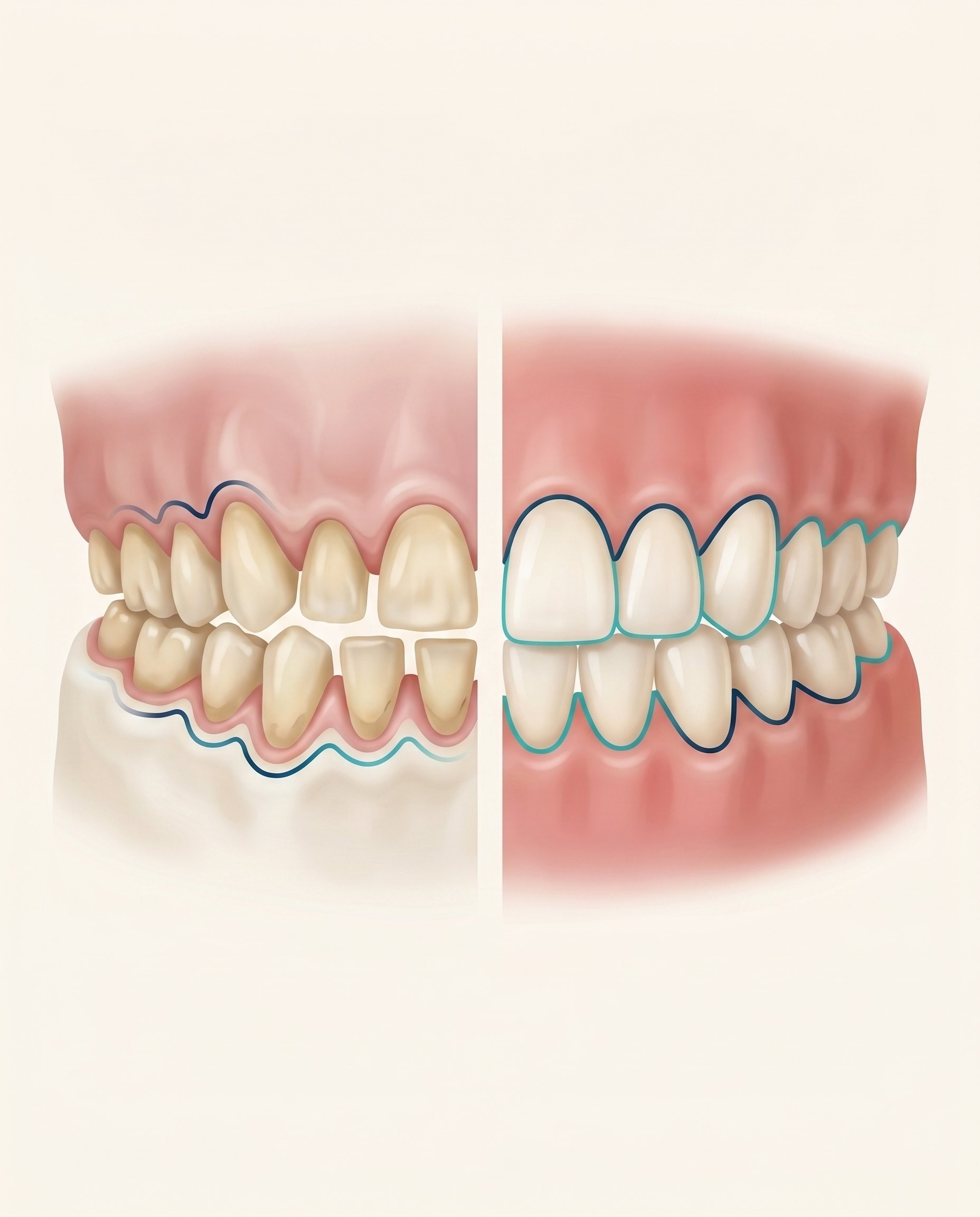
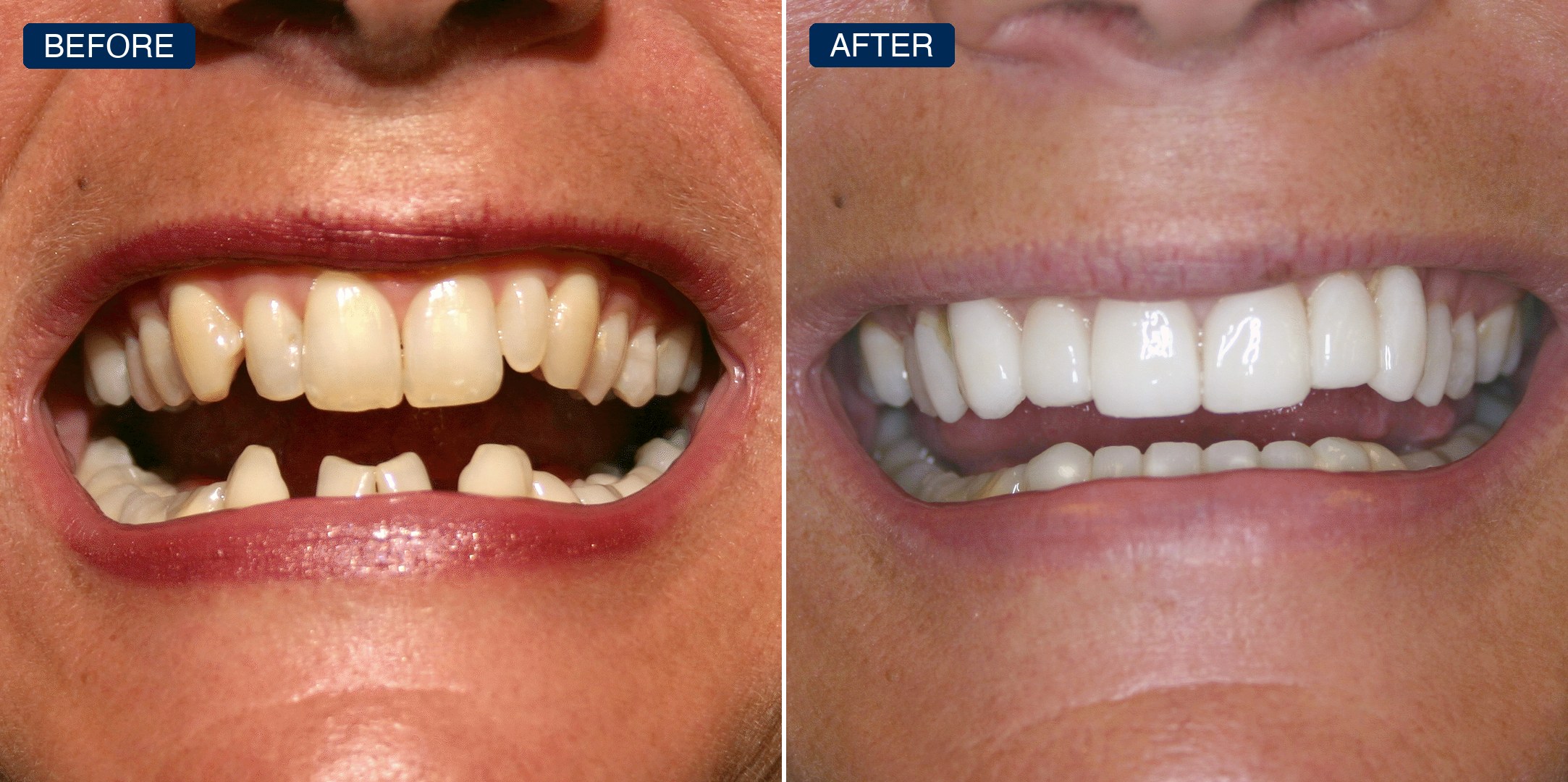
Years of wear and discoloration left this patient with an uneven, aged smile. A phased, diagnostic-first plan restored the whole arch — even, natural, and built to function.
Beyond individual repairs — here's what changes when the whole mouth is treated as one system.
A stable, balanced bite means steak, apples, sandwiches — back on the plate.
Rebuilding the bite protects teeth that haven't failed yet from joining the queue.
When TMJ is part of the reconstruction, headaches and clicking often resolve with it.
Three specialists sitting at the same table — no finger-pointing if something shifts.
Reconstructions built on a correct diagnosis commonly last 15–25+ years.
Most reconstructions fail because the people doing the work aren't talking to each other. At House Dental, they are.
Twenty-four years of diagnostic-first restorative dentistry. She builds the master plan: what's happening with the bite, the jaw, the teeth, the health factors — and the phased sequence that delivers the whole reconstruction. She owns the outcome.
Read Dr. House's Full Story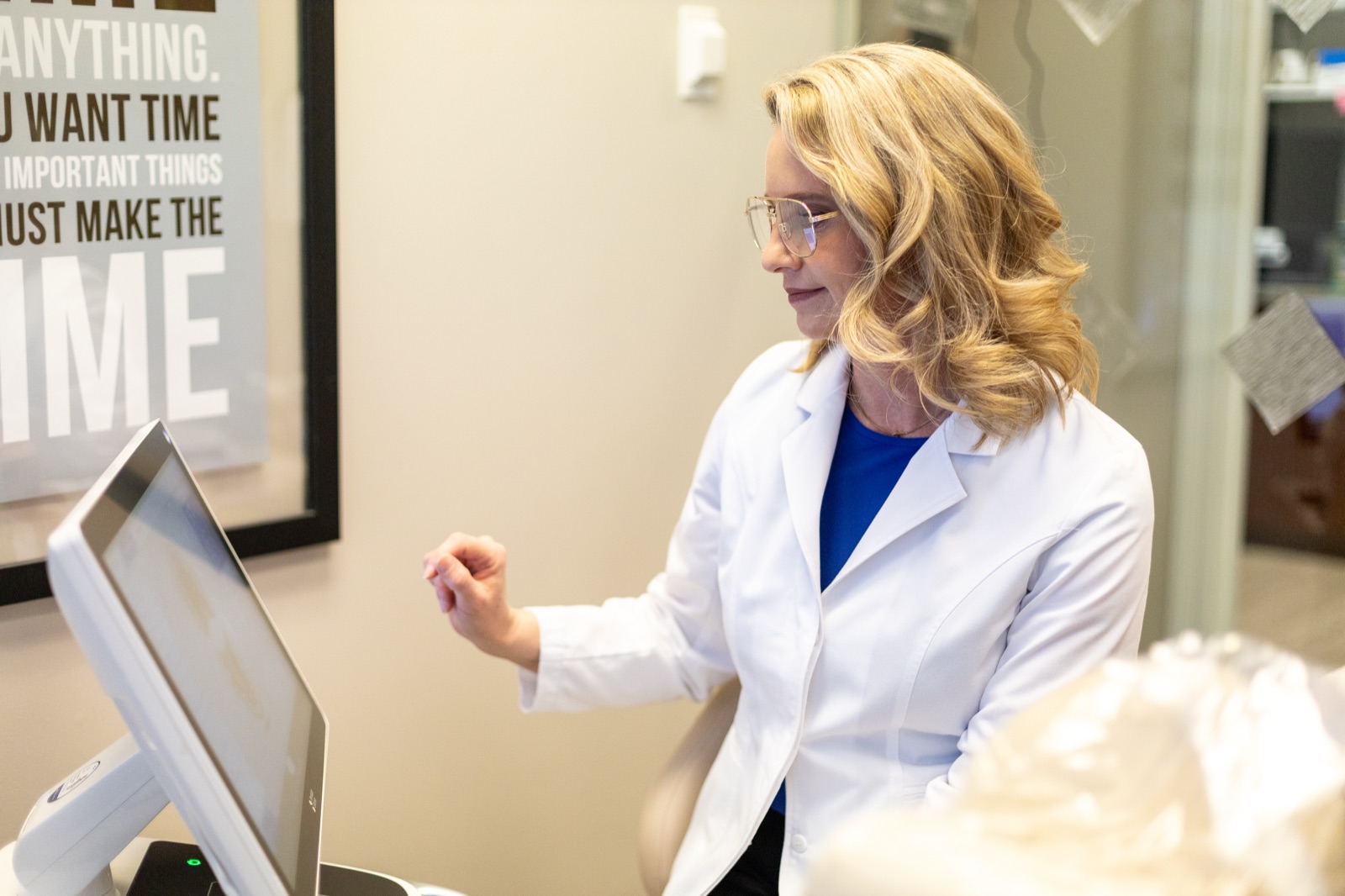
Dr. Becker is the oral surgeon on every House Dental reconstruction requiring implants. He and Dr. House review every case before surgery, working from her cone beam scans and 3D-printed surgical guides. No surprises in the chair.
See Our Implant Process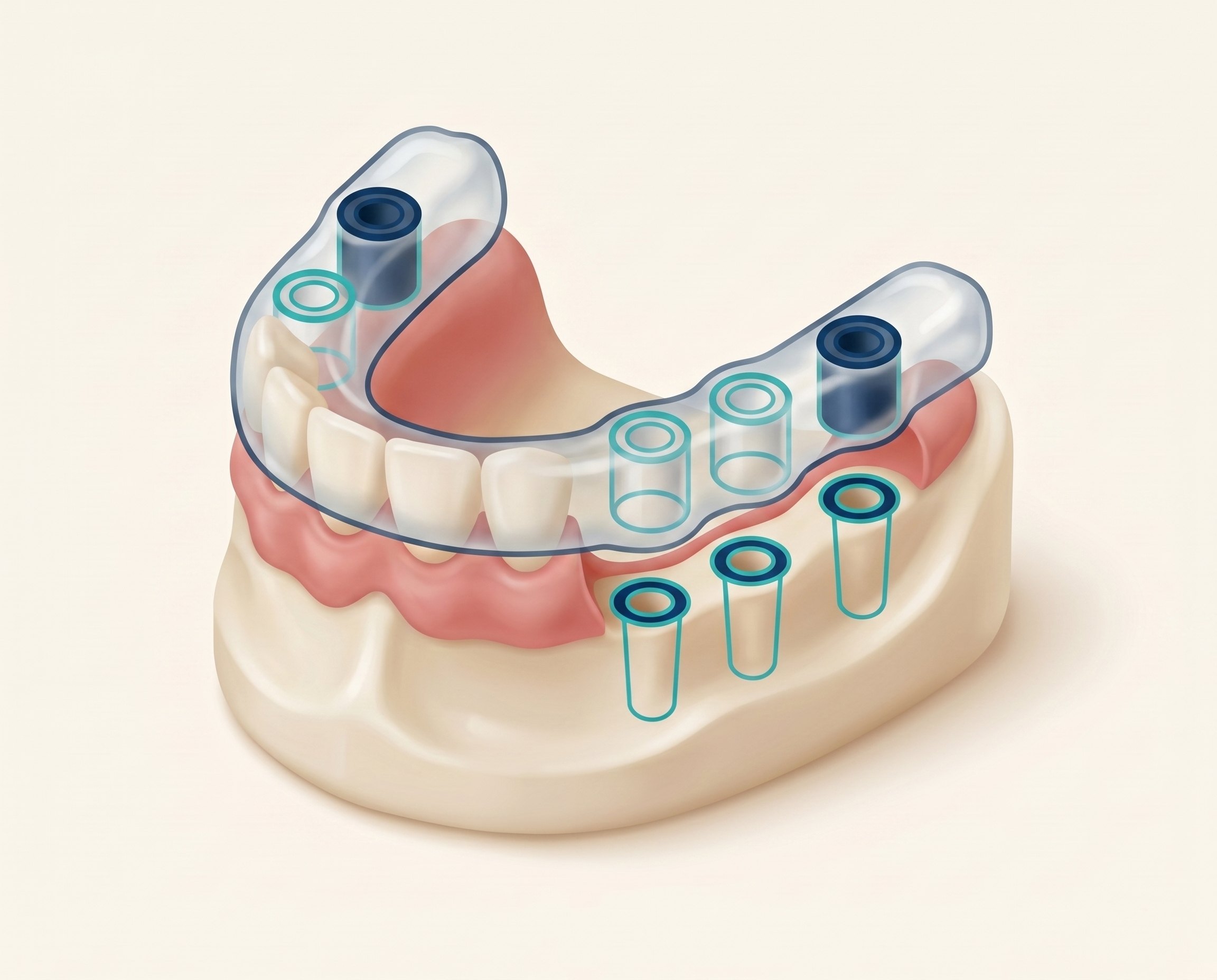
A lab technician Dr. House works with directly fabricates every custom denture, partial, and prosthetic component to her design. She reviews and adjusts each piece in person, so refinements happen with the whole plan in view.
See Dentures & Partials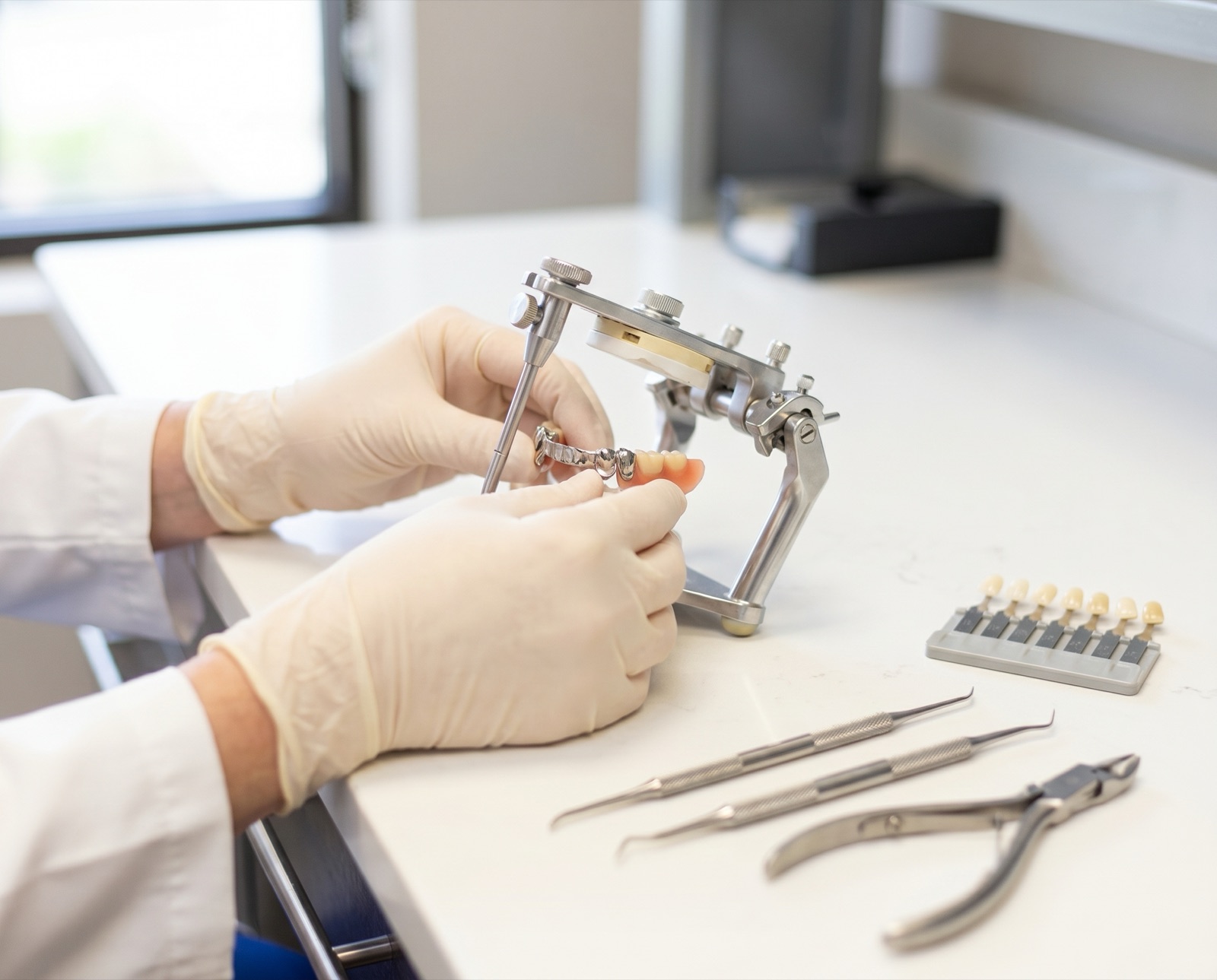
Your two-hour first visit includes cone beam CT, full-series X-rays, digital scans, photographs, and a complete medical and dental history. Dr. House evaluates the joint, the bite, the airway, medications, and every tooth individually.
Dr. House, Dr. Becker, and the lab technician review the case together. She builds a phased master plan — which teeth come out, which get restored, where implants go, whether orthodontics or TMJ treatment comes first. You see the whole sequence before anything starts.
Before restorations, the jaw and the remaining teeth have to be stable. That might mean splint therapy for the TMJ, orthodontic movement to reposition teeth, or extractions and bone grafting. The foundation has to hold before anything gets built on top.
Dr. Becker places implants using 3D-printed surgical guides. Dr. House restores with custom crowns and bridges. The lab technician fabricates any denture or partial components to Dr. House's design. Each phase is timed so the previous one has fully healed.
Reconstruction doesn't end when the last crown goes on. Dr. House builds a follow-up schedule into every plan to protect the investment. Bite checks, bone monitoring, prosthetic adjustments over time. There's a right moment for everybody, and a right pace to keep the outcome stable.
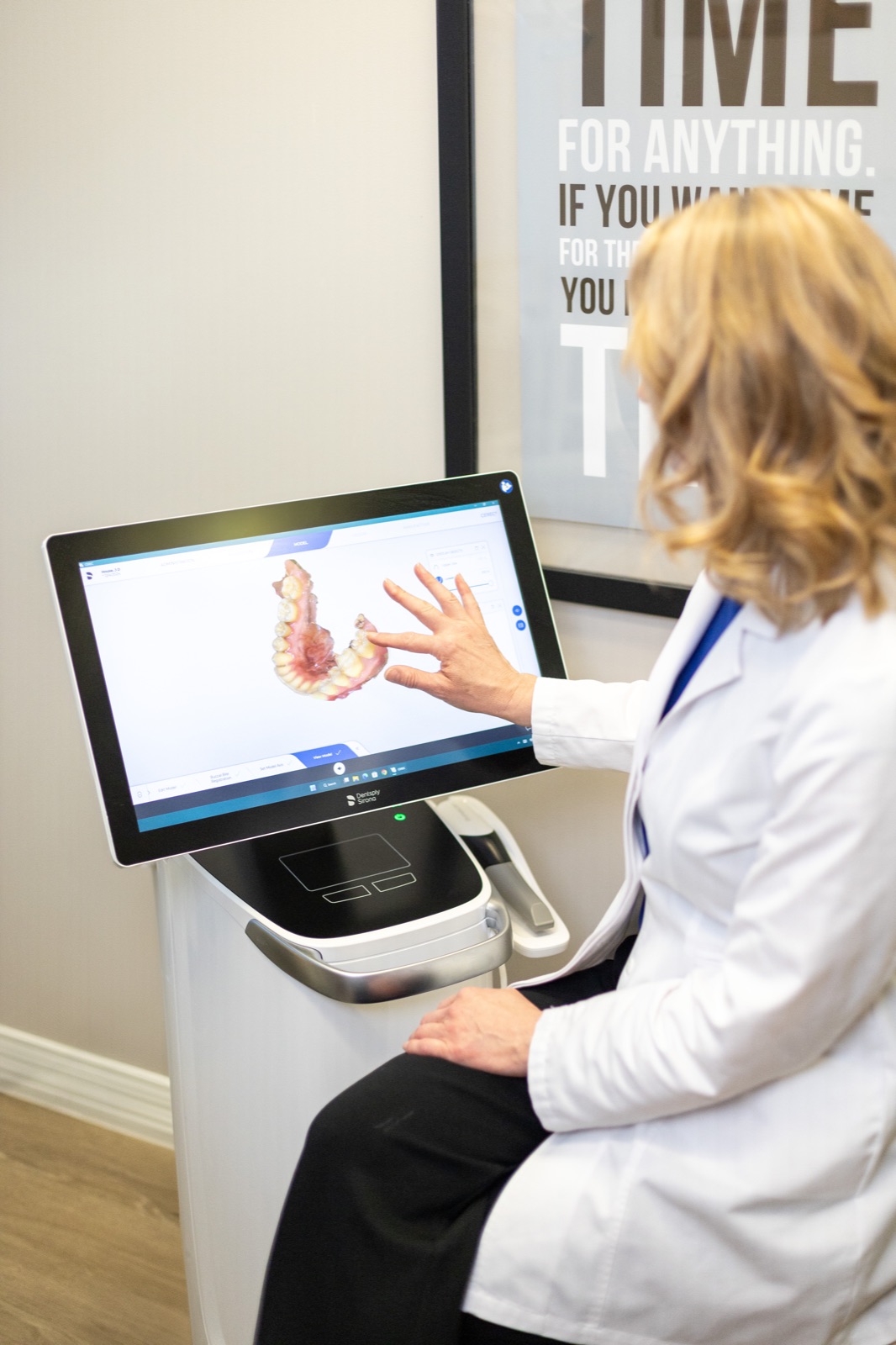
Twenty-four years of complex restorative planning — and a team built specifically for the cases other practices refer out.
Full-mouth reconstruction is where Dr. House's diagnostic-first philosophy pays off most. Every phase — extraction, splint therapy, orthodontics, implants, crowns, prosthetics — is part of one coordinated plan built from full cone beam imaging, bite analysis, DEXA data, and a full medical history. She quarterbacks the sequence. Dr. Becker and the lab technician execute alongside her. That's how the reconstruction holds for decades, not years.
Four things that make this practice the right place for the case most practices refer out.
Dr. House, Dr. Becker, and the lab technician plan every phase together before you sit in the chair. No handoffs to surgeons who haven't seen your diagnostic data. No lab guessing at the lab order. It's a group effort — and that's how the result holds.
Cone beam CT, DEXA bone density, digital scans, bite analysis, sleep screening, and a full medical history before anything starts. Reconstructions fail when a step in the diagnosis gets skipped. She doesn't skip steps.
Full-mouth reconstruction is a 12–24 month commitment. Dr. House phases the work around your budget, your calendar, and what your body can tolerate — not an arbitrary timeline. CIGNA and Aetna accepted, with CareCredit and Proceed Finance for the rest.
Stabilize the jaw. Correct the bite. Replace what's missing. Restore what's worn. Then and only then, focus on aesthetics. Dr. House refuses to put beautiful work on a broken foundation — because the foundation always wins.
I had been told by three different dentists that I needed to ‘just pull them all’ and go with All-on-4. Dr. House spent two hours looking at my case and built a full reconstruction plan that saved most of my teeth. Two years in, I chew real food and I don't think about my teeth anymore.
Verified Google ReviewDr. House, Dr. Becker, and the lab technician were literally in the same room reviewing my scans. I'd never seen three specialists collaborate on one patient before. The plan took two hours to explain and eighteen months to execute. It was worth every step.
Verified Google ReviewStraightforward answers to the questions we hear most often.
Full-mouth reconstruction is a phased treatment plan that rebuilds every aspect of the bite — teeth, jaw position, and the supporting structures — when damage or wear has affected the full mouth. It typically combines implants, crowns, orthodontics, and TMJ treatment into a single coordinated plan.
Most full-mouth reconstruction plans take 12 to 24 months. The timeline depends on what the case requires — healing time for implants, stabilization phases for the jaw, and fabrication time for custom restorations. Dr. House doesn't rush this timeline because each phase has to support the next.
Full-mouth reconstruction ranges widely based on the case — typically $30,000 to $80,000 or more depending on the number of implants, crowns, orthodontic and TMJ work involved. Dr. House provides a detailed treatment plan and cost breakdown after the diagnostic visit. Financing is available through CareCredit and Proceed Finance.
Yes. Many patients phase their reconstruction across months or years based on timeline and budget. Dr. House builds plans that address the most important issues first — pain, function, and stability — and layers in cosmetic and long-term work as the plan unfolds.
At House Dental, every full-mouth reconstruction is a coordinated effort between Dr. Allison House, oral surgeon Dr. Becker, and the lab technician. When implants, restorations, and prosthetics are all planned together from day one, the result is more consistent and more lasting.
Insurance typically covers individual components — crowns, extractions, exams, imaging — rather than “full-mouth reconstruction” as a single line item. House Dental accepts CIGNA and Aetna. Our team will help you understand your benefits for each phase. Financing through CareCredit and Proceed Finance is available for the remainder.
House Dental is at Camelback and 32nd Street — just east of the Biltmore and a few minutes from Paradise Valley and Scottsdale.
If your mouth has been breaking down tooth by tooth and you're ready for one coordinated plan instead of another partial fix, the first step is the same. Two hours, three specialists, a diagnosis that looks at everything.