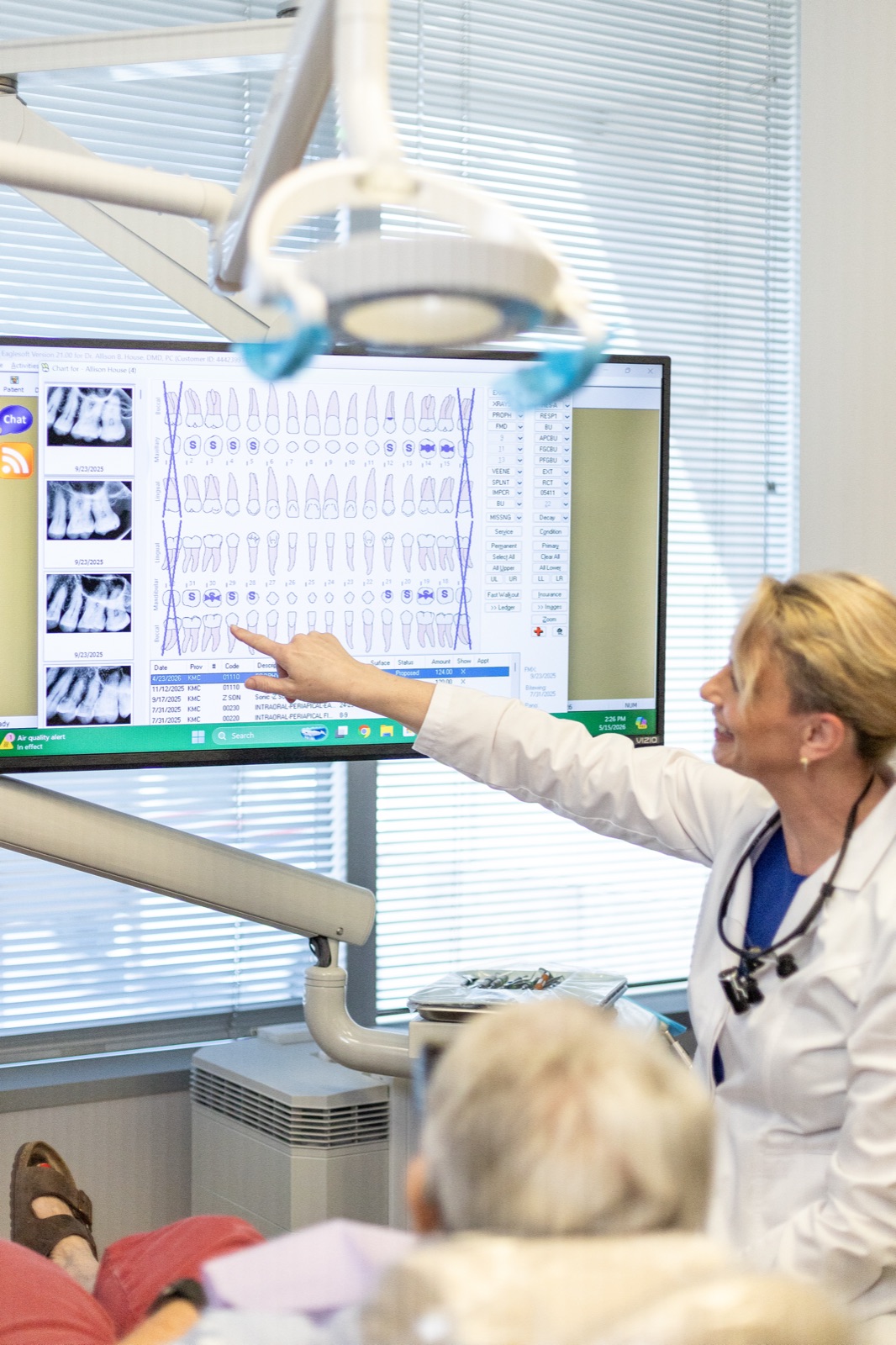
All-on-4 works for some patients, and it is being recommended to almost everyone. Before you commit to a procedure that size, Dr. Allison House can walk you through every option your bone and bite actually support.
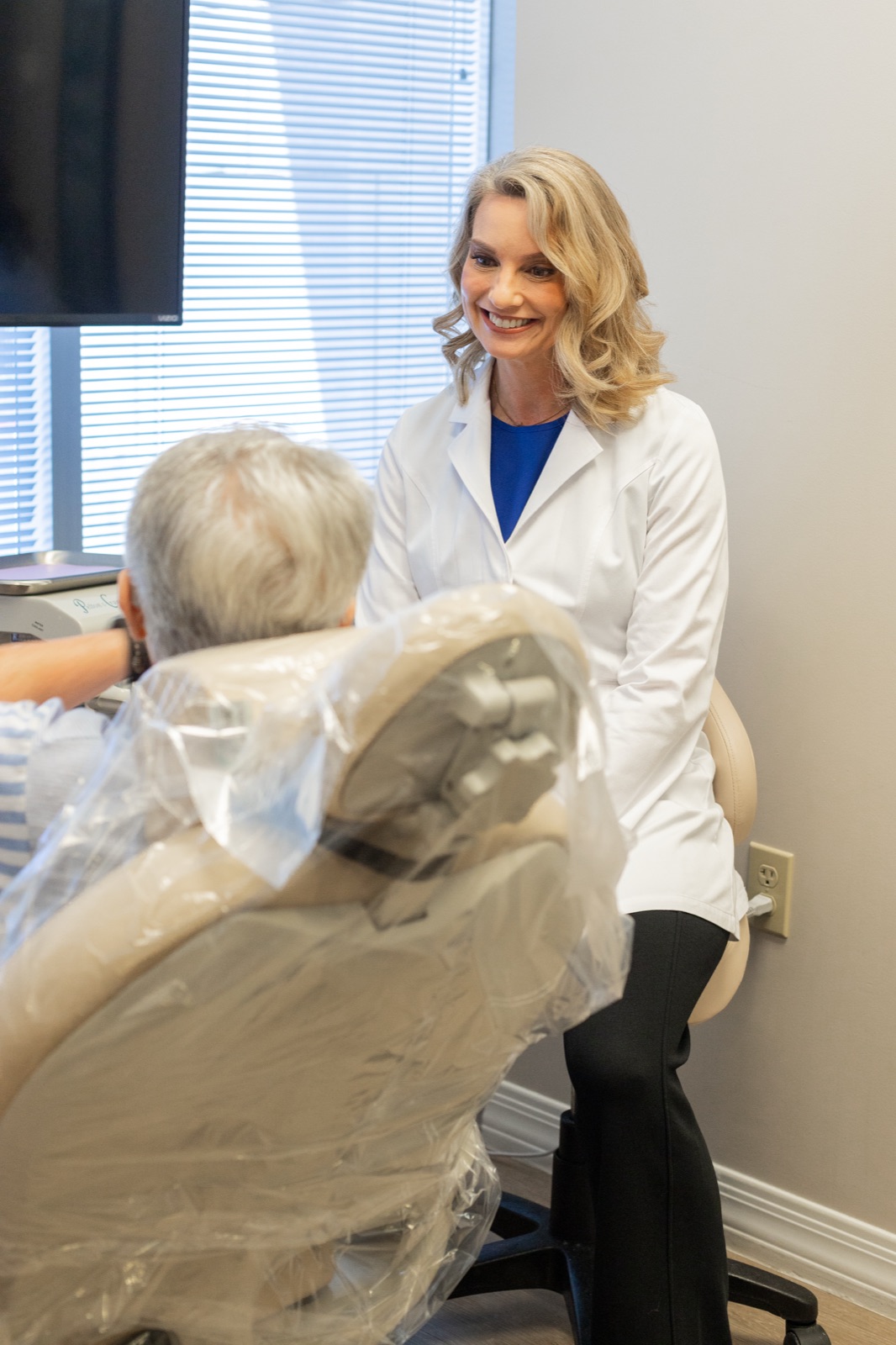
All-on-4 is a legitimate treatment for the right patient. The concern is how broadly it is being prescribed, and how often patients arrive having been offered only one option. It shows up in a wide range of ways, including these.
If any of these sound familiar, Dr. House can help you understand every option your mouth can actually support.
All-on-4 has a real place in modern dentistry. The concern is the gap between how narrowly it was designed and how broadly it is being marketed. When a single procedure becomes the default answer for every patient missing teeth, some patients end up with treatment plans that do not match their anatomy, their health, or their budget.
At House Dental in Arcadia, Phoenix, Dr. Allison House evaluates whether All-on-4 is actually the best solution for you before recommending it. Sometimes it is. Often there is a stronger long-term option.
Conventional care often focuses on symptom control. Our approach identifies and addresses the underlying biological patterns driving the condition.
"Teeth in a day" is a powerful promise, and it is repeated heavily in consumer advertising. Patients arrive at consultations already anchored on the answer.
Some implant practices run a single production flow built around All-on-4. When that is the system, the recommendation tends to follow.
Bone density determines whether implants hold. When DEXA scans and medication reviews are not part of the workup, weaker candidates can end up with treatment that does not last.
Any fixed arch sits on top of a bite. If jaw position and bite are not evaluated first, the same forces that failed previous teeth can fail the new arch.
Patients with salvageable teeth sometimes lose them under a "full extraction" plan because keeping them would change the procedure. Preservation takes more diagnosis, not less.
When the surgeon, the restorative dentist, and the lab do not plan together, the arch is more likely to need expensive revisions later.
All-on-4 is fixed. Patients are not always told what repair and long-term maintenance will involve. Informed consent requires that conversation up front.
Locator dentures, individual implants, and staged plans often match a given patient better than a fixed arch. When they are never mentioned, the choice is not really a choice.
The right answer depends on the patient. Finding it requires the kind of workup that happens before a procedure is scheduled, not after.
Your first visit is not a sales consultation. It is two hours of data collection. Cone beam CT imaging, full-series X-rays, digital scans, photographs, and a detailed review of your medical history, medications, and overall health. Dr. House collects first and recommends second.
She evaluates bone density, jaw position, and bite alignment before recommending any implant-supported solution. When bone density is a concern, she orders DEXA scans. She reviews medications that affect healing or bone quality. She does not proceed until she understands the full picture.
Dr. House presents the options that actually fit your situation. That may be All-on-4. It may be locator dentures. It may be individual implants combined with other restorations, or a staged plan that works with your timeline. You will understand why she recommends what she recommends, and she coordinates implant surgery with oral surgeon Dr. Becker and denturist Robert so the whole team plans the case together before any procedure begins.
Every plan is individualized. These are the services most often paired with a full evaluation for patients considering All-on-4.
An implant-supported removable denture with strong stability, easier cleaning, and a lower cost. This is the solution Dr. House recommends most often for patients told All-on-4 is their only choice.
Individual implants placed with cone beam imaging and custom surgical stents, planned around your bone, your bite, and your long-term health.
If your question is not here, call us. We would rather talk it through than sell you on a visit.
No. All-on-4 is a legitimate treatment that works well for the right patient. The concern is that it is being recommended too broadly to patients whose bone, jaw position, or overall health may not fully support it. The best outcomes come from matching the right treatment to the right patient.
A locator denture is an implant-supported removable denture. It snaps onto implants for stability but can be removed for cleaning. All-on-4 is fixed and stays in your mouth permanently. Locator dentures are typically less expensive, easier to maintain, and easier to repair.
That depends on your bone density, jaw position, bite alignment, overall health, and personal preferences. Dr. House evaluates all of these during the two-hour first visit and presents the options that fit your situation with a clear comparison of pros, cons, and costs.
All-on-4 typically runs twenty-five to thirty-five thousand dollars or more per arch. Locator dentures are often fifteen to twenty thousand. The right comparison is not just cost. It is cost relative to long-term outcomes, maintenance, and the risk of additional work later.
Coverage varies by plan. House Dental accepts CIGNA and Aetna. Financing is available through CareCredit and Proceed Finance, and the team will help you understand your options at your first visit.
A two-hour first visit gives Dr. House the time to evaluate your bone, your bite, and your overall health, and to walk you through every option that actually fits.