My Crown Keeps Falling Off.
When a dental crown has been cemented, replaced, and cemented again and still won't hold, the crown is usually not the problem. Dr. Allison House specializes in finding what is actually driving the failure.
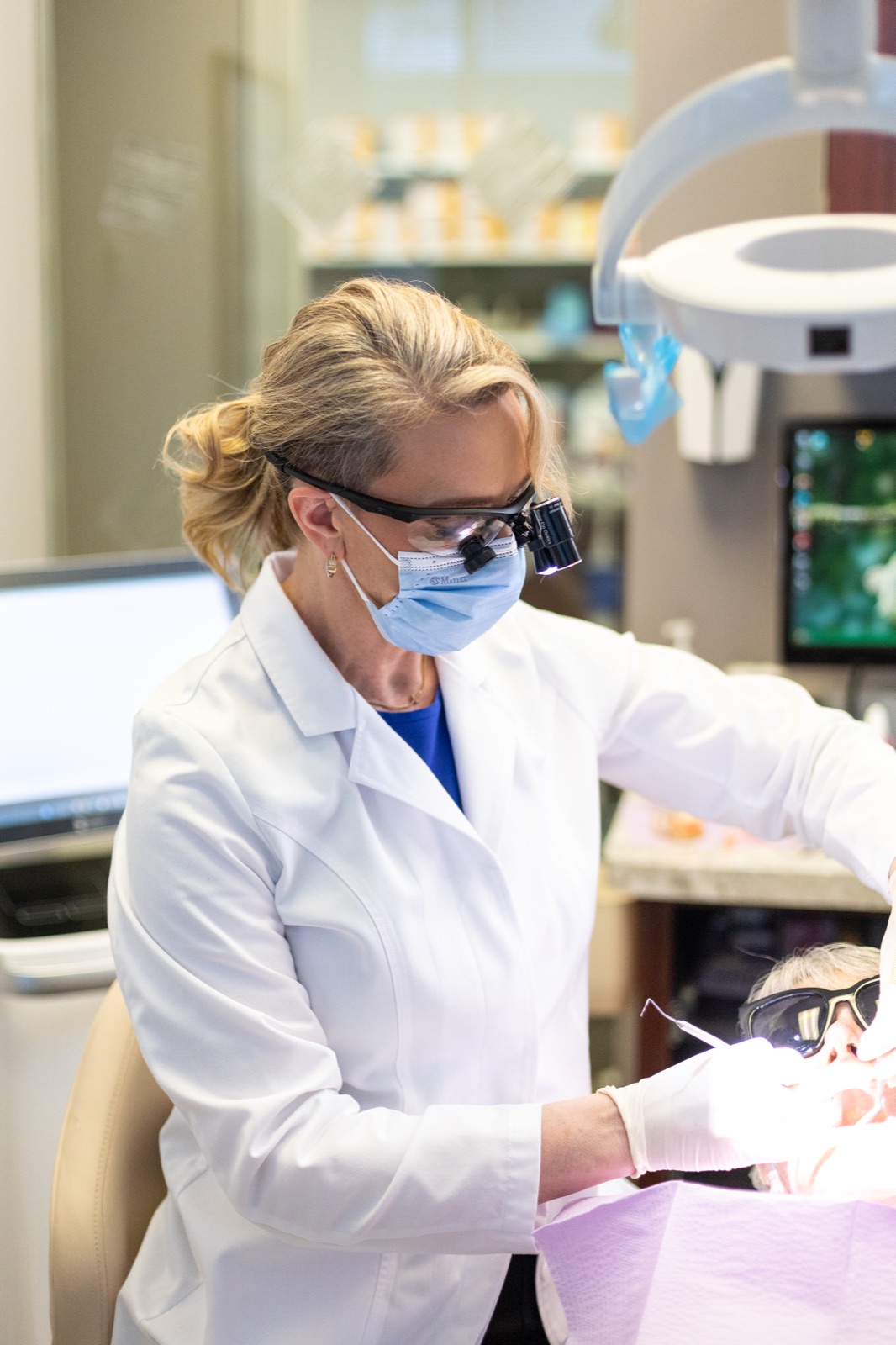
When a dental crown has been cemented, replaced, and cemented again and still won't hold, the crown is usually not the problem. Dr. Allison House specializes in finding what is actually driving the failure.
Crown failure is rarely a materials problem. It is almost always a force problem, rooted in bite, jaw position, and how the teeth around the crown are loading it. It can show up in a wide range of ways, including these.
If any of these sound familiar, Dr. House can help you find what is actually driving the failure.
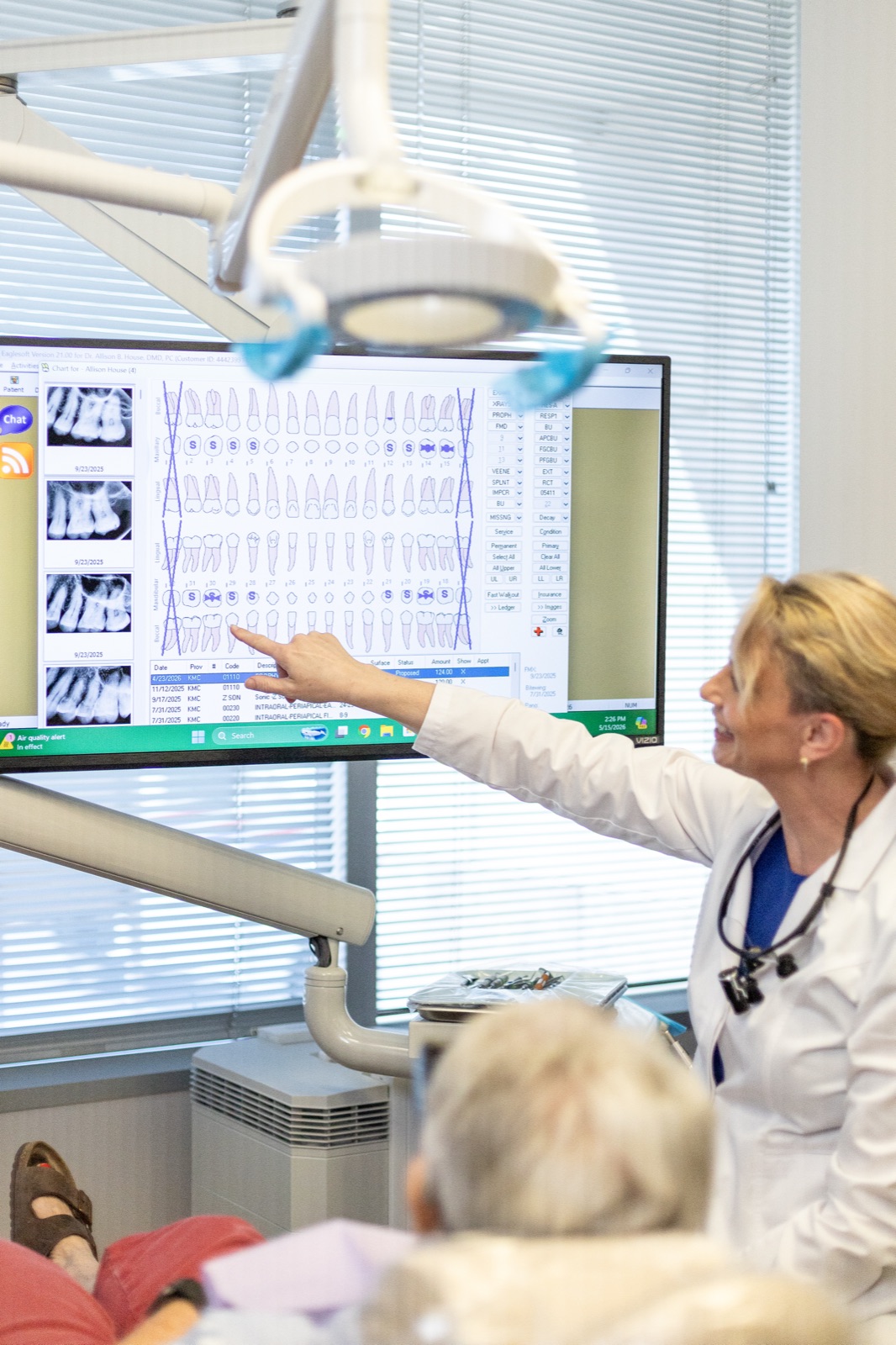
A crown is only as stable as the foundation underneath it. When crowns keep failing, the culprit is almost always the environment the crown is sitting in, not the restoration itself. The forces hitting that tooth, the angle of the bite, and the condition of the surrounding teeth are the things that determine whether a crown holds for decades or comes loose in a year.
At House Dental in Arcadia, Phoenix, Dr. Allison House evaluates the underlying drivers that explain why a specific crown keeps coming off of a specific tooth. Every mouth is different, which is why the fix is rarely "make a stronger crown."
Conventional care often focuses on symptom control. Our approach identifies and addresses the underlying biological patterns driving the condition.
When the upper and lower teeth do not meet evenly, one tooth ends up absorbing force the whole arch should share. A crown landing in that hot spot rarely survives long.
If the jaw has moved out of position from years of grinding, tooth loss, or old dental work, the crowned tooth may be contacting at the wrong angle every time you chew.
Most patients do not know they grind until the damage shows up. Night forces are far greater than daytime chewing and pop crowns loose long before they should fail.
When a neighboring tooth drifts or tips, the crowned tooth takes on loads it was not built for. The cement releases, then the crown lifts.
If the original tooth was heavily filled or fractured, there may not be enough healthy structure under the crown to hold it. Imaging reveals what the naked eye cannot.
Dry mouth from medication, acid reflux, and chronic decay all change the chemistry around the tooth. Even well-placed cement gives up in that environment.
A vertical crack in the root can lift the crown with every bite. These fractures are hard to see without cone beam imaging and get missed in quick exams.
When the temporomandibular joint is unstable, bite forces become unpredictable. The crown keeps falling because the system above it never holds still.
The crown is the symptom. The answer is almost always somewhere else in the bite, the joint, or the tooth beneath.
Your first visit is not a re-cement appointment. Dr. House collects cone beam CT scans, full-series X-rays, digital impressions, and photographs. She examines how your teeth come together, where the pressure lands, and what condition the tooth under the crown is actually in. Nothing is assumed.
She studies the data with the whole mouth in view, not just the crown that keeps failing. She looks at bite contacts, jaw position, joint condition, and the teeth around the crown. Then she explains what she finds so you understand why this keeps happening before anything gets redone.
Once the source is clear, Dr. House builds a plan that stabilizes the bite before any new crown is made. That might mean splint therapy, orthodontic adjustment, or rebuilding adjacent teeth that have been absorbing uneven force. When the foundation is right, the next crown actually holds.
Every plan is individualized. These are the services most often paired with a root-cause workup for recurring crown failure.
When jaw position and bite are the real drivers, splint therapy and bite correction often come before any new crown is placed.
Once the bite is right, Dr. House designs and mills same-day CEREC crowns built to work with your corrected bite, not against it.
When years of bite problems have worn down or broken multiple teeth, a coordinated rebuild is often the path to a result that finally holds.
If your question is not here, call us. We would rather talk it through than sell you on a visit.
When a crown fails repeatedly, the forces on that tooth are usually out of balance. The bite may be off, the jaw may have shifted, or a neighboring tooth may have moved. Replacing the crown without fixing the root cause just restarts the cycle. A thorough diagnostic workup can identify what has actually been going on.
Not at all. A crown can be perfectly made and perfectly placed and still fail if the bite is not right. The issue is not skill. It is that certain problems require a deeper level of diagnosis than most practices are structured to provide.
Crowns or fillings that keep breaking, teeth that chip without a clear cause, morning jaw tightness, and teeth that feel uneven when you close are all signs that bite force is the real driver. A two-hour diagnostic visit can confirm it.
Your first visit is two hours. Dr. House collects imaging, digital scans, and a detailed history. She examines your bite, your jaw, and the tooth under the failed crown. You will leave understanding what has been happening and what it will take to make the next restoration hold.
A two-hour first visit gives Dr. House enough time to collect the data, identify the cause, and build a plan that stops the cycle. No re-cement guesswork. No starting over in six months.